


Klimt, Gustav
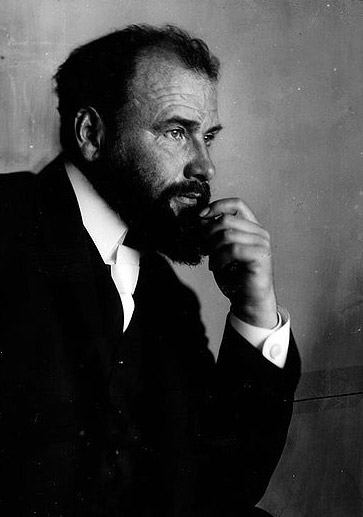
Gustav Klimt (Baumgarten, Vienna, 1862 - Vienna, 1918) was an Austrian painter and the leading figure of the Vienna Secession. The son of the Bohemian engraver and goldsmith Ernst Klimt, he began working by following his father's profession. In 1867 he enrolled at the Kunstgewerbeschule, where in 1878 he studied under F. Laufberger, who exercised a profound influence on him. Increasingly at odds with academic authorities, in 1897, following the example of what had already happened in Munich in 1892, he founded the Vienna Secession (Vereinigung bildender Kunstler Osterreichs, Secession) together with 19 other artists, and served as its president until 1905. From 1900 to 1903 he was commissioned to paint three compositions inspired by Philosophy, Medicine, and Jurisprudence for the University of Vienna; all were rejected and harshly criticised as obscene. In a tension between stark naturalism and abstract decorative language, Klimt sought to exalt nature and life in opposition to social conventions. Meanwhile, his most personal and unmistakable style matured: one based on inexhaustible preciousness, achieved through the use of different materials, including gold and glass, in a continuous unfolding of form from reality toward decorative abstraction. Klimt's visual culture drew on Byzantine and Japanese motifs and, above all, on elements of the floral style. His painting sought a refined expression, rich in literary and symbolic undertones, in which cerebral aestheticism is joined by accents of acute sensuality. His search for subtle decorative rhythms of line and colour had a major influence on the development of abstract art, including that of Kandinsky himself.