


Van Gogh, Vincent
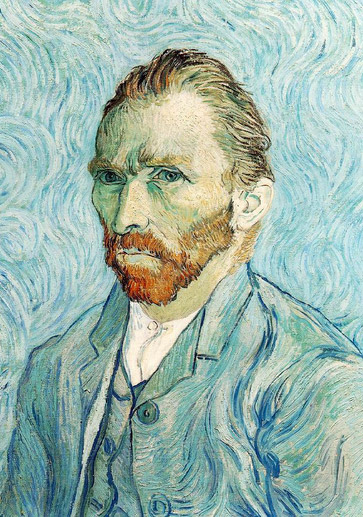
Vincent Willem van Gogh (Zundert, 30 March 1853 - Auvers-sur-Oise, 29 July 1890) was a Dutch painter. The author of no fewer than 864 canvases and more than a thousand drawings, not counting numerous unfinished sketches and various notes probably intended as studies after Japanese art, he was as brilliant as he was misunderstood during his lifetime, and van Gogh deeply influenced 20th-century art. After many years of suffering frequent mental disorders, he died at the age of 37 from a gunshot wound, most likely self-inflicted. At that time his works were little known and even less appreciated. Van Gogh began drawing as a child and continued until he decided to become a painter in the full sense of the word. He started painting late, at the age of thirty, and created many of his best-known works during the last two years of his life. His subjects included self-portraits, landscapes, flower still lifes, paintings with cypresses, depictions of wheat fields, and sunflowers. His training owed much to the example of the Barbizon painters' landscape realism and to the ethical and social message of Jean-Francois Millet. Van Gogh spent his early adult years working for an art dealers' firm and travelled between The Hague, London, and Paris. For a short time he also devoted himself to teaching; one of his first aspirations was to become a pastor, and from 1879 he worked as a missionary in a mining region of Belgium, where he portrayed members of the local community. In 1885 he painted his first major work, The Potato Eaters. His palette, then made up mainly of dark earth tones, still showed no sign of the vivid colouring that would distinguish his later works. In March 1886 he moved to Paris, where he discovered the French Impressionists. Later, after relocating to the south of France, his work was influenced by the intense sunlight he found there.